Microsoft Dynamics 'AX 7' / Rainier
The news that there is an upcoming version of Microsoft Dynamics AX (version 7) and that this will be a revolution in terms of the technology that drives it and the user experience is not new, we mentioned it here back in August 2013. Microsoft has been discussing the Rainier project for several years at different events, but the interesting news is still under NDA so it cannot be published yet.

However, in recent events that have been organized around the product, such as the recent AXUG Focus 2015 and ASUG Summit and the past Convergence 2015 and Microsoft Dynamics Technical Conference 2015 numerous images have been published (For example: 1 2 3 4 5 6 7) that reveal the appearance the product is taking and the new interface, in addition to some ideas (without much concrete detail) about the changes in technology, architecture and development tools, all aligned with Microsoft’s new mantra: Cloud first, Mobile first.
The changes that await us in the next version are oriented in four major directions:
- New web-based UI: multi-platform + multi-device. Compatibility with non-Microsoft browsers such as iPad and Android.
- Cloud First: All deployment will be in Azure. Even on-premise installations will be Azure through Azure Pack.
- Improved lifecycle to facilitate implementations for partners and customers via Microsoft Lifecycle Services.
- Development tools in Visual Studio, while maintaining X++ as the development language. Most tools from previous versions have been redesigned for the new environment.
General Information
- Launch planned for late 2015
- Customer Support for AX 2009 has been extended through April 2018.
- The functionality is practically the same as in 2012 R3, this new version is mainly a technological change
- Azure First: The first version will be available only in Azure. The plan is for the first on-premise version based on hybrid cloud to be released 6 months later, facilitated by the new Azure Pack from Microsoft.
- Version 2012 continues to be updated every 6 months with rollups of hotfixes, regulatory and compatibility adjustments (with new versions of Windows, for example), etc.
- A new Cumulative Update every 6 months. Improved granularity of updates via LCS to decide which features to include in each update, facilitating upgrades without drastic changes to the current installation. The next one will be in June, CU9.
- The migration process from 2012 to AX7 has been simplified to make it much simpler and more efficient than previous ones, through LCS.
- As you can guess, LCS becomes a fundamental tool for partners.
New Web-Based User Experience
- New web client, mainly browser-based (multi-browser and multi-platform).
- There is Windows 8 client, probably also for the upcoming Windows 10 which will be multi-device.
- Enterprise Portal disappears!
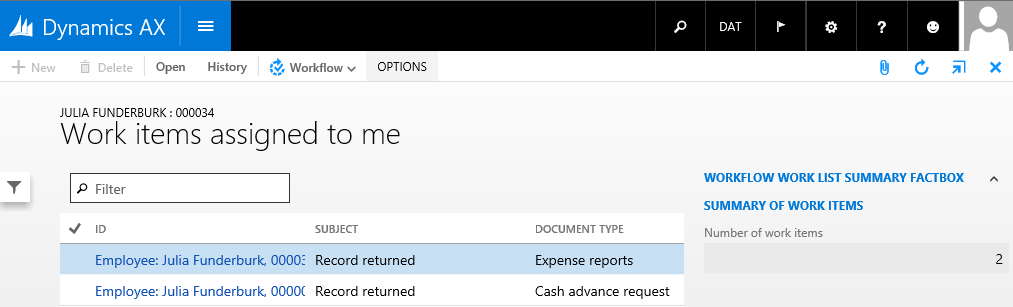
- New user experience based on Work Spaces, replacing previous Role Center, with advanced BI elements embedded like PowerBI and OData feeds to facilitate external BI.
Development Tools in Visual Studio
- All AX 7 development tools have been moved to Visual Studio (version 2013 for now) and adapted to the new web and cloud environment.
- X++ becomes a complete .NET language, no more intermediate p-code.
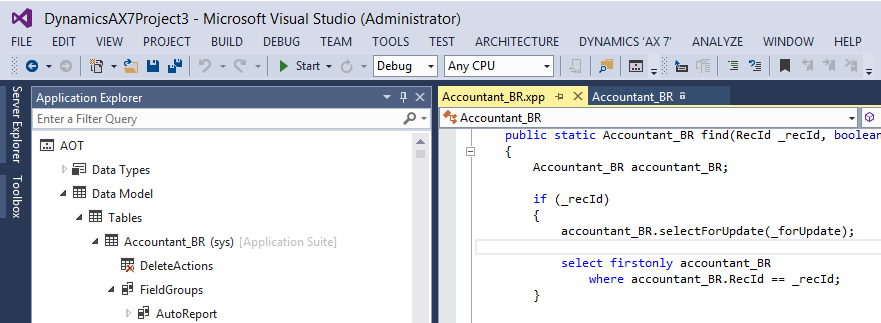
- Old MorphX tools have been redesigned to work in Visual Studio, such as the task recorder, which will allow to generate documentation, as it did before, but also facilitate tests automation.
- Apart from classic AX tools, you can use Visual Studio’s own tools like solutions or projects.
- Native compatibility with Team Foundation Server.
- Advanced build engine for cloud deployment.
- AOS disappears, it will be a web service exposed in the cloud. The development environment simulates it locally to develop without AOS.
- These services will connect to a SQL Azure server either PaaS or DBaaS.
And many more interesting details that we’ll publish as soon as they let us ;)