Dynamics 365, AppSource, PowerApps and Company... What to Expect from the Future of ERP at Microsoft?
For quite some time now (we talked about it here and here) Microsoft’s long-term objective of offering its enterprise solutions as cloud services has been intuited. The ones that are missing, because most have been there for a long time like Sharepoint or CRM Online, and others not so much like NAV (announced as Project Madeira and available for testing only in the US and Canada).
This intuition becomes almost evident seeing the enormous effort the product team has made to bring the new Dynamics AX to Azure and the extensive integration with all the SaaS services and infrastructure offered there such as Power BI, Cortana Intelligence, Azure IoT and a long and growing etcetera, and also with the recently announced LinkedIn acquisition.
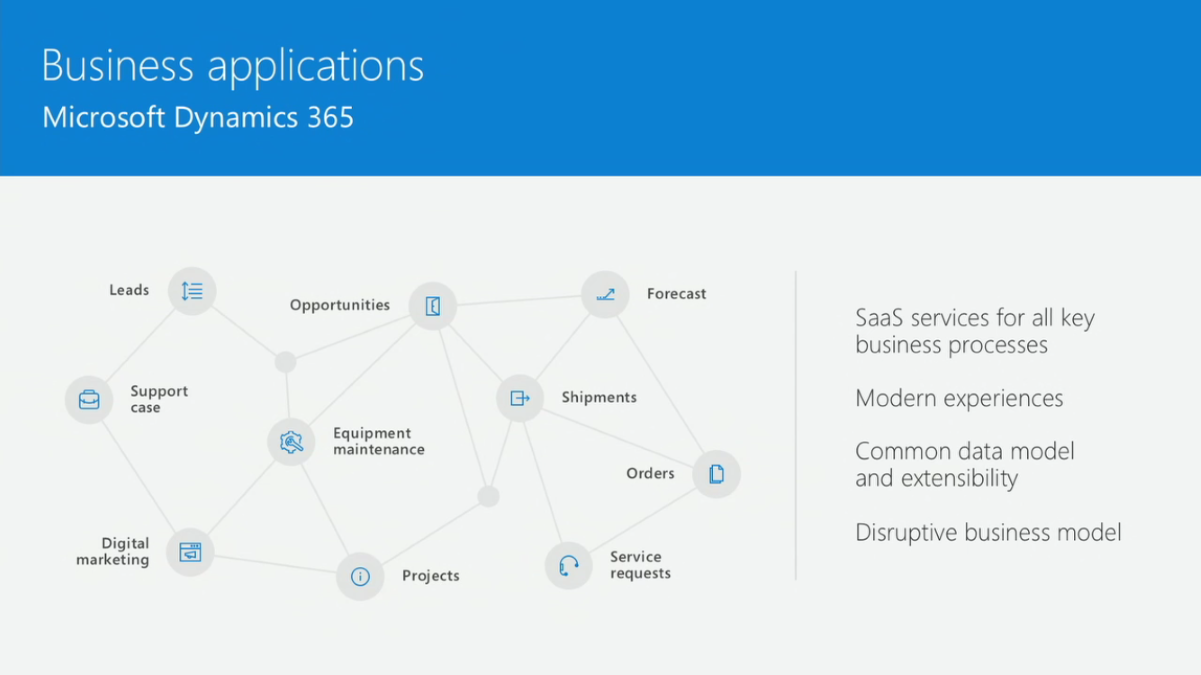
To confirm these suspicions, which were already an open secret, during the past Worldwide Partner Conference the materialization of this strategy was announced in the form of a new product called Dynamics 365 and which at this point I would be very surprised if you hadn’t heard about, since it has been on everyone’s lips in recent weeks.
- Dynamics 365 - Rethink what’s possible for your business with intelligent business apps in the cloud A lot has been published on social media and partner blogs on the subject, but there isn’t much officially confirmed information, so I’ll try to make a summary/compilation of what we do know for sure and focus on material published directly by Microsoft or from reliable sources. For those who prefer to hear it, this video from the WPC contains a lot of useful and first-hand information: Driving Enterprise ERP Business
Dynamics 365 What is it and When Will It Be Available?
TL;DR
Dynamics 365 is basically a complete solution for Microsoft’s enterprise customers that encompasses the current features of ERP products (NAV and AX) and CRM, so that it can be implemented in a simple and incremental way, starting from a few users up to the scalability of a complete Dynamics AX system, and its launch is announced for the coming fall (October is mentioned in some sources, but we know how this works). For now it doesn’t come to replace existing solutions but to complement the available offering with a more customizable, easy to implement, buy and scale offering to current customers of other solutions like Office 365. However, and as it seems obvious, it uses the technologies and functionalities already developed for these products (AX, NAV, CRM) as a base, which will continue to evolve. Microsoft AppSource is also announced, the new store where partners can sell their custom solutions in a centralized way.
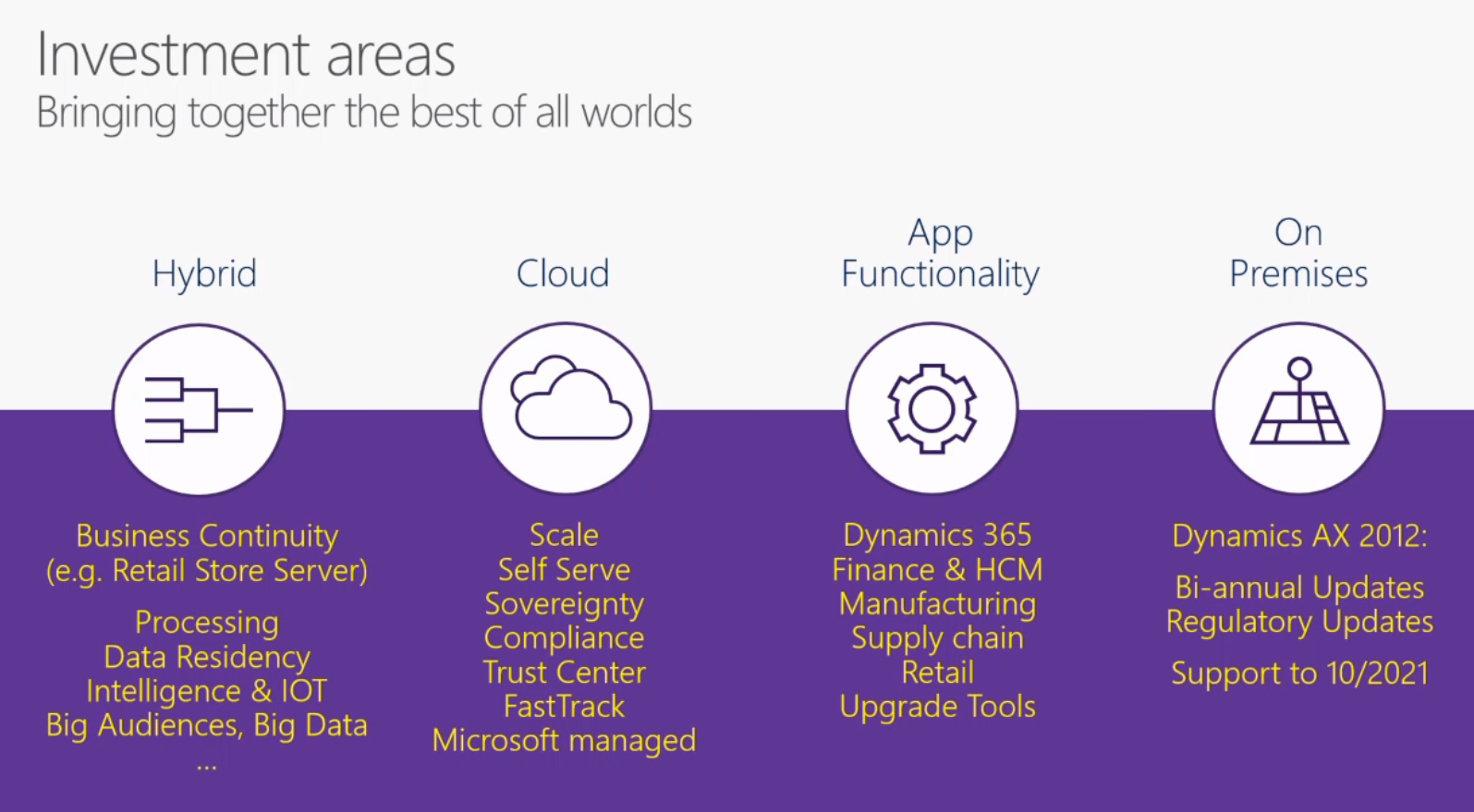
Dynamics 365 - Investment areas
To better understand this roadmap, you must take into account the recent announcement (not official) that Azure Stack, Microsoft’s solution that would bring Azure services to our on-premise servers, has been delayed until mid-2017, although there are no announced dates, just an announcement that it won’t be launched soon. Also mention that extended support for Dynamics AX 2012 R3 has been extended 3 years until 2023, and the latest CU11 revision was released a few weeks ago with support for SQL 2016, so we can understand AX 2012 as the de facto solution for on-premise or hybrid cloud use (AX 2012 R3 can be deployed on Azure in IaaS mode) in the short term, while Dynamics 365 is announced exclusively available in the public cloud. During the WPC the imminent publication of a dynamic roadmap in web format was announced, updated at “cloud speed” (every 90 days) and showing investment plans in the short, medium and long term for all products and in detail by modules, technologies, etc., including planned changes in features and business processes.
I Want to Know More
Dynamics 365 will be part of the already extensive offering of services available under the Azure subscription for enterprises. It will be a unique service that will encompass functions specific to ERP and CRM applications such as Sales, Customer Service, Finance, Operations, Marketing, etc. As part of Azure services it will integrate natively with the rest, such as Power BI, Cortana Intelligence, Azure IoT, and with services that may appear in the future. Of course these business processes will have full integration with Office 365 and therefore with the tools users use during those processes such as email, Excel spreadsheets, Word documents, etc. AppSource will complement these standard modules that Microsoft will provide based on the functionality of NAV (in its SaaS version called until now Project Madeira), CRM Online and the new Dynamics AX, with new solutions based on these technologies, a new common data model (called for now Common Data Model, CDM), and the rest of services that partners can develop to improve this offering.
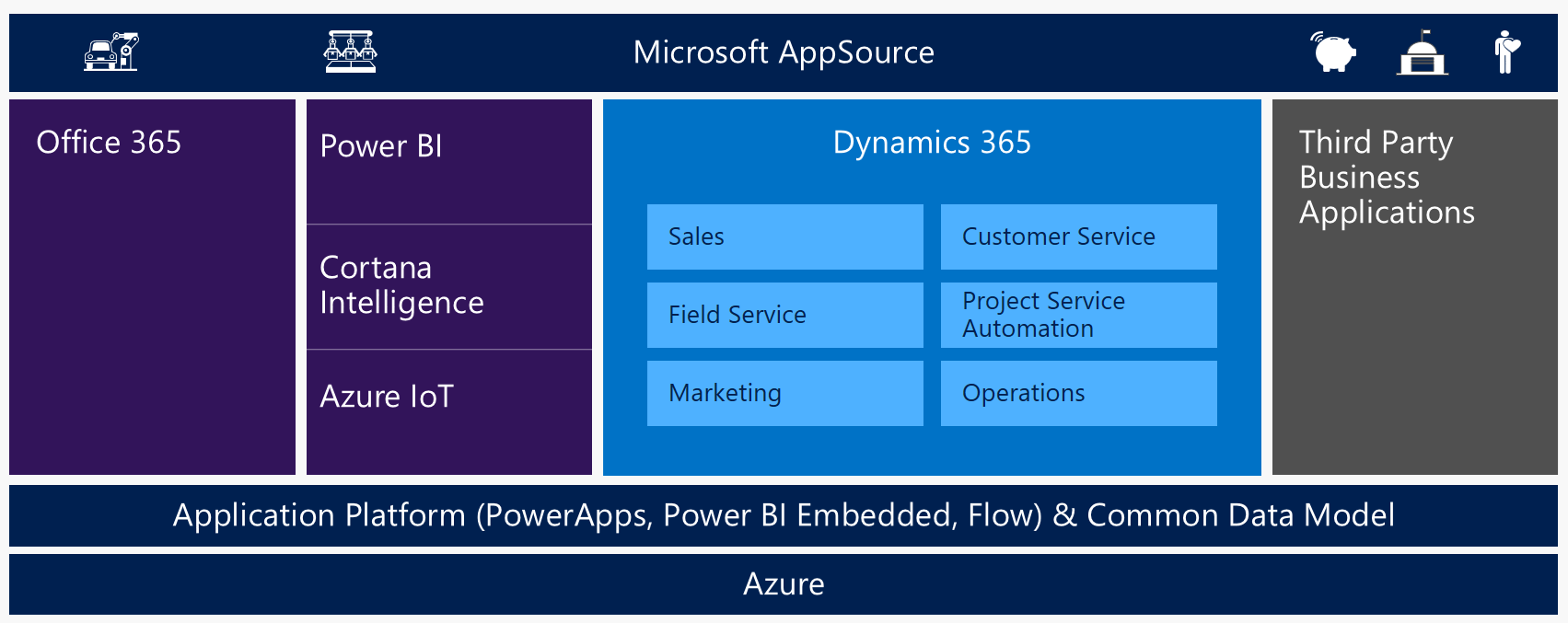
Only Microsoft has all the pieces to deliver an intelligent business cloud
As for licensing, although the offering is not yet confirmed, two versions are expected (Enterprise and Small Business) and two licensing modes (per application or per role, called Team Member). The application-based license is the traditional model in which you contract the use of one or more of the available modules (Sales, Marketing, Operations, etc.), while the role-based model aims to provide a more flexible and customized solution to each user’s needs, allowing each user to have access to the parts of each application they need for their work. Prices will not be available until shortly before the official launch.
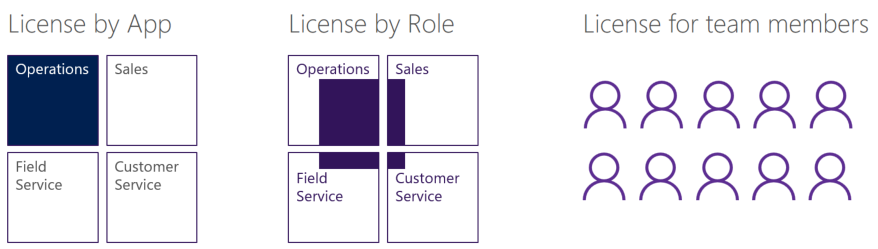
Dynamics 365 - License plans
Predictably the Business version (also called “Financials”) is based on the recently announced Project Madeira (Dynamics NAV as a cloud service) and will include the modules (called “Apps”): Financials, Sales and Marketing. The Enterprise version will include components from the new Dynamics AX to add the Apps: Operations, Customer Service, Field Service and Project Service Automation. In both cases, sales and marketing functionality will likely use CRM Online components. Financials will launch first (where it can already be tested) in the US and Canada, and this first version will be followed by Enterprise with the remaining modules. Availability by country will be incremental, it won’t be globally available from launch. Solutions available only in the cloud such as CRM Online and Madeira (“NAV Online”) will be replaced by some of the “flavors” of Dynamics 365 (presumably) at the next license renewal after launch, while on-premise versions can be maintained as they are (including current perpetual on-premise licenses, without periodic subscription). Specific details, both of licensing models and specifications and transition plans for current customers will be published when there’s little time left before launch.
How Does This Affect Current Products? (And Their Professionals!)
The announcement insists that this solution does not come to replace current solutions but to complement the available offering, and that in any case it’s an announcement of what will happen in the next year and even later. I leave it to each person’s discretion to interpret or make the predictions they consider most accurate. Personally I would be prepared for some changes in my way of working in the medium and long term and would keep an open mind towards training and updating, if we don’t already have it. It has been officially announced that all of Microsoft’s line-of-business applications will align in the medium term to follow a common data model and a modular cloud architecture that facilitates integration between them, with new Microsoft features, with the rest of Azure services, and with new features developed by partners through App Source. There are no concrete details about this data model but it’s something I’d like to publish about as soon as we have more information.
As I’ve mentioned, Dynamics 365 will be available totally and exclusively in the public cloud, so current products will continue to be used, which will continue to innovate and evolve in parallel for on-premise implementations and also for large accounts when the offering in Dynamics 365 is not sufficient to cover full functionality. Developing connectors for these on-premise applications with their cloud versions is part of the roadmap, both to support hybrid scenarios and to facilitate migration to the cloud from current systems.
AppSource opens up a new business avenue for partners and also a new challenge for consultants and developers, as it allows developing features that can be sold and deployed independently on existing applications through a Store (like the Office Store, Windows Store or the Azure Marketplace) that will allow customers to discover and test these features with minimal effort.
These applications can make use of all services on Azure as we’ve already said, allowing partners to develop new features for business processes, intelligence (with Power BI) and prediction (with Cortana Intelligence), and also new features designed to orchestrate the integration of formal business processes with less structured actions through tools for defining integrated workflows between applications and based on events such as Microsoft Flow IFTTT-style. For example: When a new account is created in CRM, send a welcome email with an attachment, create a folder and a series of documents in my OneDrive with the account data and create alerts in Outlook to call the customer and schedule a first meeting. Although these are tools designed to be used directly by advanced users (or “citizen developers”), surely from our development teams we’ll need to stay up to date with their use to incorporate them into our solutions.
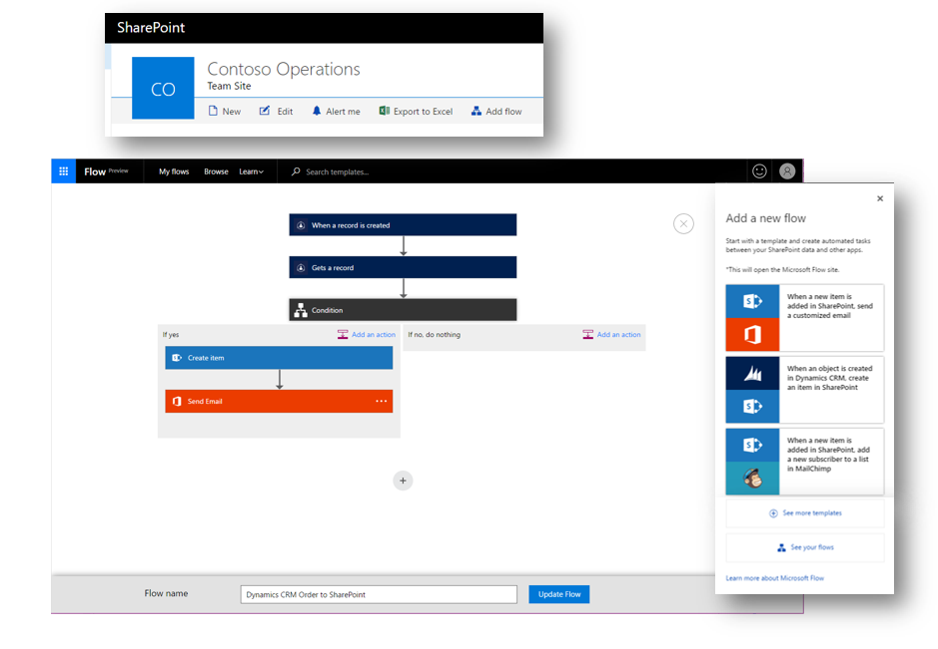
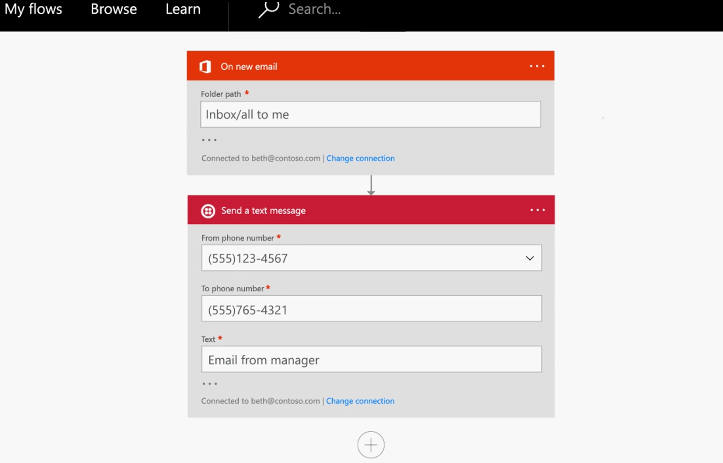
Given the integrated philosophy of this new solution, and seeing that in presentations they refer to PowerApps in general, this integration will not be limited only to Flow but will in the future integrate other cross-cutting applications that Microsoft can work with like Microsoft Graph.
More Information…
- Microsoft Dynamics 365
- Reinventing Business Processes - Satya Nadella
- Turning business process into business advantage for organizations everywhere - Takeshi Numoto
- Innovating with Business Apps in the Cloud - Christian Pedersen
- Insights from the Engineering Leaders behind Microsoft Dynamics 365 and Microsoft AppSource - Jujhar Singh & James Phillips
- PowerApps and the Microsoft Common Data Model - Karthik Bharathy
- Business application platform innovation
- PartnerSource - Microsoft Dynamics 365 (requires login)
The post turned out a bit long, and perhaps less technical than usual, but the truth is that we don’t know the technical details yet so it’s not possible to go deeper. No doubt I will as soon as I can :)